Lake Havasu City’s monsoon season brings unique challenges like dust storms, heavy rain, and power issues that can damage your HVAC system.
To protect your HVAC during monsoon season, regular maintenance, proper sealing, and surge protection are crucial. This guide helps you keep your AC running smoothly and efficiently all season long.
Understanding Monsoon Season’s Impact
Lake Havasu City faces a distinct set of challenges during monsoon season. These aren’t just minor inconveniences; they can significantly stress your home’s air conditioning and heating system.
Understanding these impacts is the first step in safeguarding your investment.
Lake Havasu City’s Monsoon Challenges
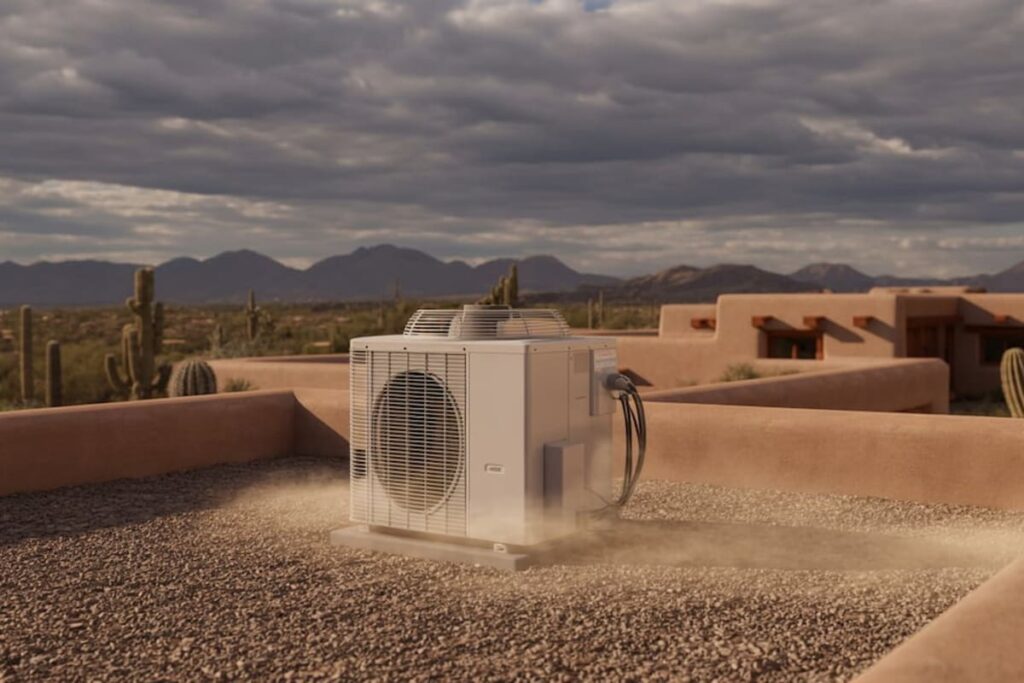
- Sudden Dust Storms (Haboobs): These massive walls of dust carry fine particles and debris that can quickly clog filters and coat outdoor units.
- Heavy, Intermittent Rainfall: Intense downpours can lead to water pooling, potential flooding around units, and even rust or corrosion.
- Power Fluctuations and Outages: Thunderstorms often cause voltage spikes, brownouts, or complete power loss, all of which can harm sensitive HVAC electronics.
- Increased Humidity Levels: Your AC works harder to dehumidify the air, potentially leading to strain and higher energy bills.
Guarding Against Dust and Debris
Dust and airborne particles are primary enemies of an efficient HVAC system during monsoon season. Proactive steps can save you from costly repairs.
Air Filter Inspections and Replacement
Monsoon dust clogs filters much faster than usual. A dirty filter restricts airflow, making your system work harder and consume more energy.
- Check your air filter monthly, or even more often during dusty periods.
- Choose a MERV 8-11 filter for good dust control without overly restricting airflow.
Cleaning the Outdoor Condenser Unit
The outdoor unit, or condenser, is vulnerable to dust and debris buildup.
- Safely turn off power to the unit before clearing away leaves, twigs, and dust from its fins.
- Clear airflow is essential for your unit to dissipate heat efficiently.
Sealing Your Home and Ductwork
Prevent dust from entering your home and, consequently, your HVAC system.
- Check for gaps around windows, doors, and vents. Seal them with caulk or weatherstripping.
- Ensure your ductwork is properly sealed to prevent dust intrusion and maintain efficiency.
Preventing Water Damage and Humidity Issues
Water can be just as damaging as dust, especially when it collects where it shouldn’t.
Clear Condensate Drains
Your AC removes humidity, and that water needs to drain properly. Clogged condensate lines can lead to overflows, potentially damaging your indoor unit or ceiling.
- Regularly check for standing water near your indoor unit.
- Pour a cup of distilled vinegar down the drain line every few months to prevent algae growth.
Proper Drainage Around Outdoor Unit
Water pooling around your outdoor unit can lead to corrosion and electrical issues.
- Ensure the ground slopes away from the unit.
- Keep gutters and downspouts clear to prevent overflow onto your AC system.
Managing Indoor Humidity
High indoor humidity makes your home feel warmer and can promote mold growth. Your HVAC system plays a vital role in dehumidification.
- Monitor humidity levels with a hygrometer; aim for 30-50% relative humidity.
- Signs of high indoor humidity include clammy air, musty odors, or condensation on windows.
Protecting Against Power Fluctuations
Monsoon thunderstorms often bring unstable power, a serious threat to your HVAC’s electronics.
HVAC Surge Protectors
Voltage spikes can fry sensitive components in your AC system. Installing a surge protector is a smart investment.
- Consider a whole-home surge protector or a dedicated HVAC unit protector for the best defense.
- These devices divert excess electricity, shielding your unit from damage.
Handling Power Outages
Knowing what to do during and after an outage protects your system.
- When the power goes out, turn off your AC at the thermostat to prevent damage from power surges upon restoration.
- Allow at least 5-10 minutes after power returns before restarting your AC. This delay helps stabilize the electrical supply.
Stay Ahead with Proactive Maintenance
Don’t wait for a problem to arise during the monsoon. Regular, proactive maintenance is your best defense against the season’s harsh conditions. A professional inspection can identify potential issues before they become major breakdowns, ensuring your system is ready for anything Lake Havasu City’s summer throws its way.
Protect your HVAC during monsoon season by scheduling professional HVAC repair, maintenance, installation and replacement services.
At The Weatherman AC, we’re here to help keep your home comfortable and your system running efficiently, no matter the weather.
Contact us today for reliable service you can trust.