TL/DR: When your mini-split struggles during winter, low refrigerant may be the culprit. Because modern inverter mini-splits use electronic expansion valves and variable-speed compressors, accurately charging in heat mode requires recovering and weighing in the refrigerant with a digital scale rather than using superheat or subcooling. Here is what you need to know about safety, diagnostics, and professional service in Lake Havasu City.
Understanding Mini-Split Refrigerant and Heat Mode Challenges
Mini-split heat pumps are highly efficient systems that use a reversing valve to switch between cooling and heating. In heat mode, the outdoor coil acts as an evaporator to absorb ambient heat from outside air, while the indoor coil acts as a condenser to release that heat into your home.
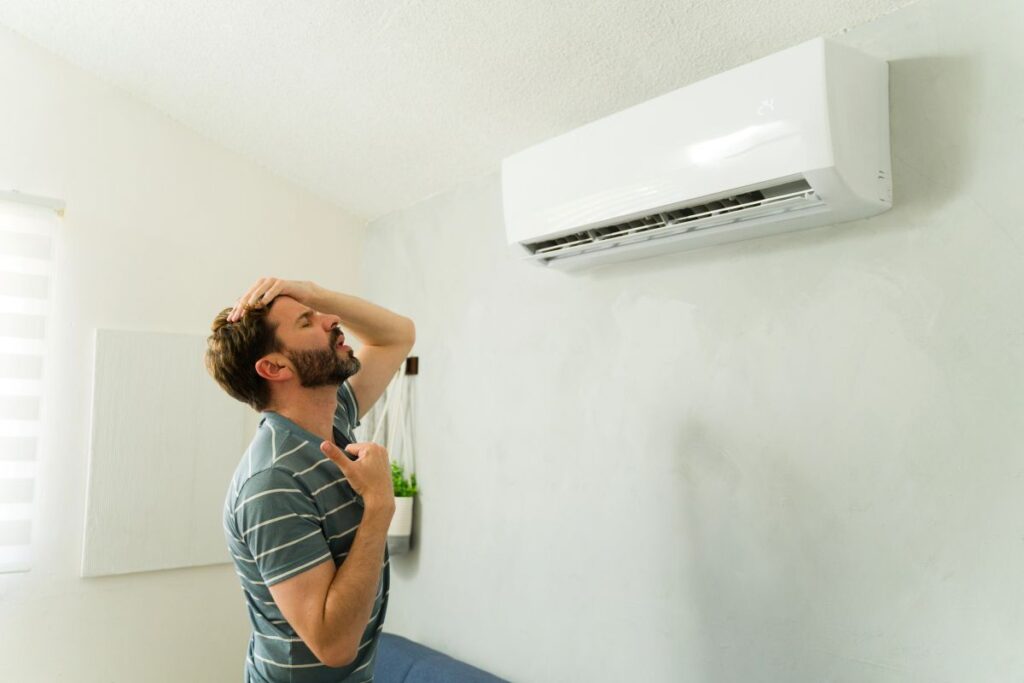
This heating process relies on an exact, factory-specified refrigerant charge. If the charge drops even slightly, heat transfer drops dramatically, which is often the primary reason why your mini split is blowing cold air on heat mode.
Charging a mini-split in cold weather presents unique technical challenges. Dropping outdoor temperatures lower overall system pressures, and the service valve on the outdoor unit becomes the high-pressure liquid line in heat mode, making standard gauge connections complex and hazardous.
Why Superheat and Subcooling Don’t Work on Inverter Mini-Splits
A common mistake in DIY guides is advising technicians to charge mini-splits by measuring superheat and subcooling. While this method works for traditional single-stage air conditioners, modern mini-splits utilize variable-speed inverter compressors and Electronic Expansion Valves (EEVs).
Because the EEV constantly adjusts refrigerant flow and the compressor continuously changes speeds to meet indoor heating demand, superheat and subcooling values fluctuate perpetually. Relying on these readings almost guarantees an overcharged or undercharged system.
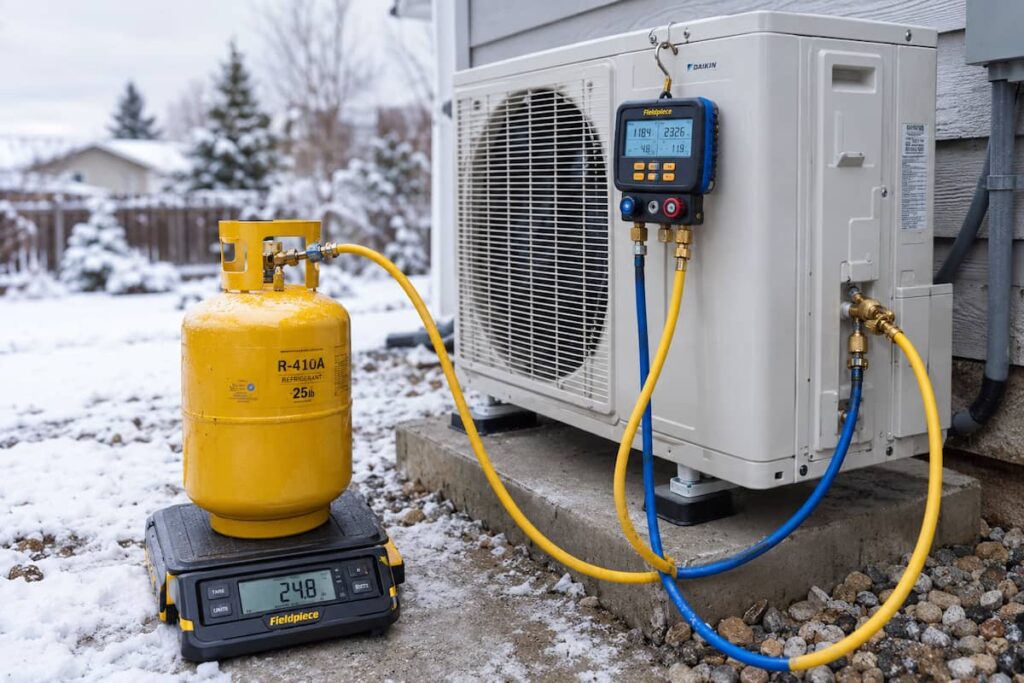
The industry gold standard for charging an inverter mini-split is the weigh-in method. A technician recovers any remaining refrigerant, evacuates the system, and uses a precision digital scale to weigh in the exact factory charge plus any required adjustment for total lineset length.
The Critical Role of Proper Diagnostics and Leak Detection
Refrigerant operates in a closed loop and is never consumed during normal operation. If your system is low on refrigerant, a leak is present and must be located and repaired before adding new refrigerant.
A professional service call begins with a nitrogen pressure test and electronic leak detection. Simply topping off a leaking mini-split without fixing the breach wastes money and can lead to severe compressor damage.
Properly servicing a mini-split requires dedicated equipment: a digital refrigerant scale, recovery machine, high-vacuum pump, and a micron gauge to verify that the system is clean and evacuated below 500 microns.
Step-by-Step Considerations for Charging in Heat Mode
Safety and technical precision are critical when servicing high-pressure mini-split systems. Certified HVAC technicians follow a strict step-by-step protocol to safely restore factory charge:
1. Safety Preparation and PPE
The technician equips personal protective equipment (PPE), including eye protection and thermal gloves, to guard against high operating pressures and freeze burns.
2. Refrigerant Recovery
Using an EPA-approved recovery machine and cylinder, all remaining refrigerant is safely evacuated from the system rather than vented into the atmosphere.
3. Nitrogen Pressure Testing & Repair
The lineset and coils are pressurized with dry nitrogen to pinpoint and repair leaks at flare connections, service valves, or coils.
4. Deep Vacuum Evacuation
A high-vacuum pump evacuates the system down below 500 microns to remove all moisture and non-condensable air from the refrigeration loop.
5. Weigh-In Charging by Scale
Placing the refrigerant drum on a calibrated digital scale, the technician inputs the exact factory-specified charge weight, plus any additional ounces required per foot of extra lineset.
6. System Verification & Heat Testing
The system is restarted in heat mode to verify compressor ramping, monitor defrost board operation, and measure supply air temperature splits.
When to Call a Professional
Attempting to charge a mini-split without EPA certification, specialized training, and calibrated tools risks voiding your manufacturer warranty, damaging sensitive electronics, and violating federal environmental regulations.
Handling high-pressure refrigerants safely requires professional expertise to prevent personal injury and guarantee reliable heating when temperatures drop.
The Weatherman AC offers comprehensive mini-split services, including installation and replacement. We ensure your mini-split is perfectly sized and installed for optimal performance, ensuring you get the most out of your investment.
If your mini-split is struggling to heat your Lake Havasu City home, don’t guess. Contact The Weatherman AC today for expert service and peace of mind.