TL;DR: In most cases, you don’t need to completely cover your outdoor AC unit in winter. Modern units are engineered to withstand Lake Havasu City’s mild winter conditions and occasional cold snaps.
Covering it fully can actually do more harm than good by trapping moisture, fostering mold growth, and inviting pests. Instead, focus on keeping the area around it clear and consider a partial, breathable cover only if debris like falling leaves or ice is a major, consistent concern.
Do You Need to Cover Your Outdoor AC Unit in Winter?
Many homeowners in Lake Havasu City naturally wonder if they should completely cover their outdoor AC unit in winter. There’s a common misconception that an air conditioner needs heavy protection from the elements.
However, modern air conditioning units are specifically designed and rigorously tested to endure harsh outdoor conditions, including low temperatures, rain, and even snow. They’re built for resilience.
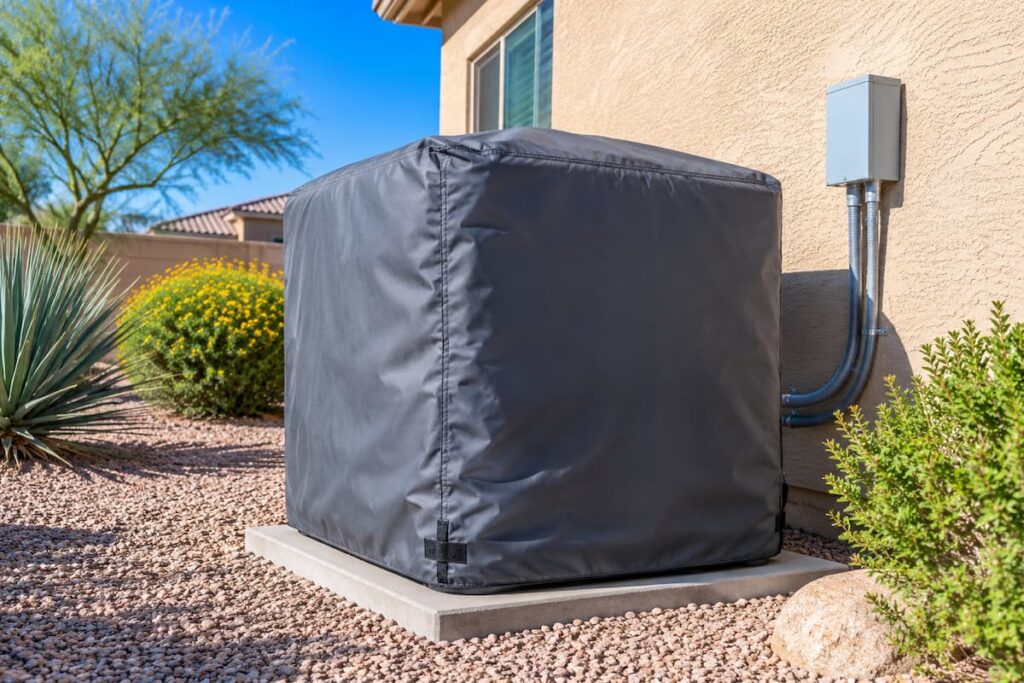
These robust units feature durable, weather-resistant casings and internal components that are sealed and protected against moisture and debris. Trying to seal them off entirely with a non-breathable cover can inadvertently create a humid, stagnant environment inside the unit.
This can lead to more problems than it solves, like corrosion or fungal growth. It’s often better to leave them mostly exposed, allowing them to breathe as intended.
What Happens If You Don’t Cover Your AC?
You might worry about accumulated rain, snow, or even rust if you leave your AC uncovered during the cooler months. However, the metal parts of these units are treated with corrosion-resistant coatings, making them highly resilient.
A bit of snow or ice collecting on the fins won’t harm the internal components; they are already insulated and sealed against such elements. The design accounts for typical winter weather.
What you really avoid by not fully covering your unit is creating an appealing, warm, and damp shelter for unwanted creatures. A fully enclosed space becomes a perfect nesting ground for rodents, insects, or even snakes seeking refuge from the cold.
These unwelcome guests can cause significant damage by chewing through electrical wires, building nests that block airflow, or leaving corrosive droppings, leading to costly repairs.
When Covering Your AC Unit is a Good Idea (and When It’s Not)
While completely covering your AC unit is generally not recommended, there are very specific situations where a partial cover might be beneficial.
If your unit is positioned directly beneath a roofline that consistently drops heavy snow, icicles, or a large amount of tree debris, a cover over just the top section could prevent physical damage. This is about preventing impact, not temperature regulation.
This type of cover should be specifically designed to shield only the top of the unit. Crucially, it needs to allow for plenty of unobstructed airflow on all sides. Avoid anything that creates an airtight seal, traps moisture, or restricts ventilation.
The goal is targeted protection from falling objects, not sealing off the entire system. Remember, proper air circulation is vital even when the unit isn’t running.
The Right Way to Protect Your Outdoor Unit (If You Choose To)
If you decide to offer some protection due to specific local conditions, think of it more like providing a ‘hat’ rather than a ‘full winter coat.’ A sturdy piece of plywood secured loosely on top, or a specialized AC cover that only shields the upper portion, can work well.
Ensure whatever you use is firmly secured against winds but never impedes the natural circulation of air around the unit’s sides.
Many reputable store-bought AC covers are specifically designed to sit loosely on top, preventing debris accumulation while still allowing air and moisture to dissipate freely.
This open design is essential for preventing condensation buildup and inhibiting rust, mold, or mildew formation. Never wrap the entire unit tightly in plastic, a heavy tarp, or any non-breathable material, as this creates a harmful microclimate.
What Winter Maintenance Does Matter for Your AC?
Instead of spending time and effort trying to figure out how to cover your outdoor AC unit in winter, focus on truly impactful winter preparation. Start by thoroughly clearing away any accumulated leaves, twigs, grass clippings, or other debris from around the unit’s base and sides.
A clear perimeter not only looks better but also helps prevent future blockages and ensures optimal airflow when the unit is active again.
Regularly check for any overgrown shrubs, weeds, or plants that could obstruct airflow or potentially damage the unit’s delicate fins. Trimming these back provides necessary clearance and reduces the chance of moisture retention around the unit.
A clean, unobstructed surrounding area ensures your unit can operate efficiently, reducing wear and tear, and minimizing potential damage from organic matter or even pest infestations.
Why Regular HVAC Service is Key
The absolute best way to ensure your AC unit is prepared to endure winter and ready for the intense Lake Havasu City heat is through consistent, professional maintenance.
Don’t let common myths or unnecessary worries about winter AC protection leave you guessing. Trust the experienced team at The Weatherman AC to provide clear, accurate advice and reliable service.
We’re your local experts for all heating, ventilation, and air conditioning solutions for homes and businesses in Lake Havasu City, Arizona. We ensure your comfort systems stay efficient and dependable.
Give us a call today to schedule your service or to discuss any HVAC needs!