When winter arrives, understanding your heat pump’s settings is key.
This post breaks down the difference between emergency heat or auxiliary heat in AC systems, explaining when each engages, their efficiency, and how to use them correctly for comfort and to avoid high energy bills.
Understanding Auxiliary Heat (Aux Heat) in Your AC System
What is Auxiliary Heat?
Auxiliary heat acts as a supplemental heating element designed to help your heat pump.
It typically consists of electric resistance coils, much like what you’d find in a toaster, that generate warmth.
Your system engages aux heat automatically. It kicks in when the heat pump alone struggles to reach your thermostat’s setting, especially during very cold weather or after a quick temperature adjustment.
Crucially, aux heat works with your heat pump, providing an extra boost, not replacing its main function.
Is Auxiliary Heat Efficient?
Auxiliary heat is generally less efficient than your heat pump operating solo.
However, it’s more efficient than emergency heat for short, temporary bursts.
It’s designed for these brief boosts, not as your primary heating source.
If your auxiliary heat runs constantly, it’s a big concern for your energy bills and system health.
What is Emergency Heat and When to Use It?
Defining Emergency Heat
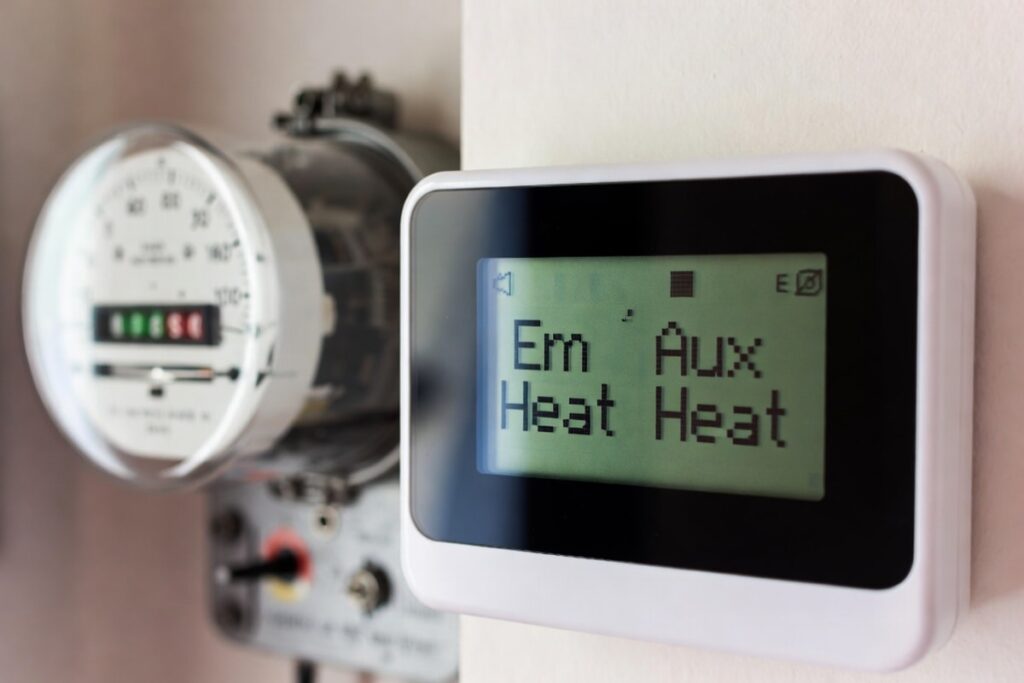
Emergency heat is a manual override function. It completely bypasses your heat pump, relying solely on electric resistance coils for heating.
These are the same electric coils used by auxiliary heat, but with emergency heat, you engage them manually, and they run continuously.
You should only activate emergency heat if your heat pump is malfunctioning or completely broken and can’t provide any heat. Think of it as a temporary solution to prevent your pipes from freezing.
The Crucial Difference: Automatic vs. Manual
- Auxiliary Heat: Engages automatically; works with your heat pump.
- Emergency Heat: Engaged manually; works instead of your heat pump due to an emergency.
The Cost of Emergency Heat
Using emergency heat means significantly higher energy consumption and utility bills.
It’s the least efficient way to heat your home.
That’s why it’s strictly a temporary, emergency measure, not a mode for routine heating.
Auxiliary vs. Emergency Heat: Key Differences at a Glance
- Engagement: Automatic (Aux) vs. Manual (Emergency)
- Purpose: Supplement (Aux) vs. Emergency Replacement (Emergency)
- Heat Pump Status: Working (but struggling) (Aux) vs. Malfunctioning/Broken (Emergency)
- Efficiency: Less efficient than heat pump (Aux) vs. Least efficient heating mode (Emergency)
- Cost: Higher than heat pump (Aux) vs. Highest heating cost (Emergency)
When to Use Which Mode: Practical Scenarios
When to Rely on Auxiliary Heat
- During cold snaps when your heat pump struggles to hold the desired temperature.
- After you adjust your thermostat, and the system needs to quickly raise the temperature.
- For brief periods, this is a normal part of heat pump operation in colder climates.
When to Activate Emergency Heat
- Your AC unit (heat pump) is blowing cold air when it should be heating.
- The outdoor unit of your heat pump is frozen solid.
- You hear unusual noises or detect strange odors coming from your system.
- The heat pump completely stops working altogether.
- Warning: Only use emergency heat if you truly suspect a system malfunction. Prolonged use without a real emergency indicates an underlying problem that needs attention.
The Warning Signs: When Your System Needs Attention
Auxiliary Heat Runs Constantly
If your auxiliary heat seems to run all the time, it’s a clear signal your heat pump might be underperforming or failing.
This could point to issues like low refrigerant, dirty coils, or even a faulty compressor.
Needing Emergency Heat Frequently
Regularly relying on emergency heat is a definite sign of a serious problem with your main heat pump system.
Ignoring this warning will lead to much higher bills and potentially more severe system damage.
Other Symptoms of a Failing Heat Pump
Look out for insufficient heating, unusual noises or smells, or your system short cycling (turning on and off frequently).
If your heat pump isn’t effectively heating your home, leading to constant auxiliary heat engagement or the need for emergency heat, it’s a clear sign that professional HVAC repair and maintenance is required. Timely service can diagnose and fix underlying issues before they escalate.
Maintaining Your Heating System for Optimal Performance
Regular Professional Check-ups
Professional check-ups prevent small issues from turning into major emergencies.
They also ensure the efficient operation of both your heat pump and its auxiliary components.
Understanding when your system might be failing helps you make informed decisions about repairs or considering a new unit.
If your current system is old and inefficient, or frequently breaking down, exploring HVAC installation and replacement services might be a cost-effective long-term solution.
DIY Maintenance Tips
- Change your air filters regularly, ideally every 1-3 months.
- Keep the outdoor unit clear of leaves, dirt, and other debris.
- Ensure your thermostat is programmed correctly for your comfort needs.
Know Your Heat Settings for Comfort and Efficiency
Understanding the distinct roles of auxiliary and emergency heat protects your comfort and your wallet.
Remember to use emergency heat only in true emergencies; it’s the most expensive way to stay warm.
Proactive AC maintenance ensures a reliable and efficient heating system throughout the colder months.
Need Expert HVAC Help in Lake Havasu City?
When your heating system isn’t performing as it should, whether it’s your heat pump, auxiliary heat, or you’re stuck relying on emergency heat, The Weatherman AC is here to help.
Our certified technicians provide comprehensive HVAC installation, replacement, repair and maintenance services for homes and businesses in Lake Havasu City, Arizona.
From routine maintenance and expert repairs to professional installations and replacements, we ensure your comfort and peace of mind.
Contact The Weatherman AC today for reliable HVAC services!