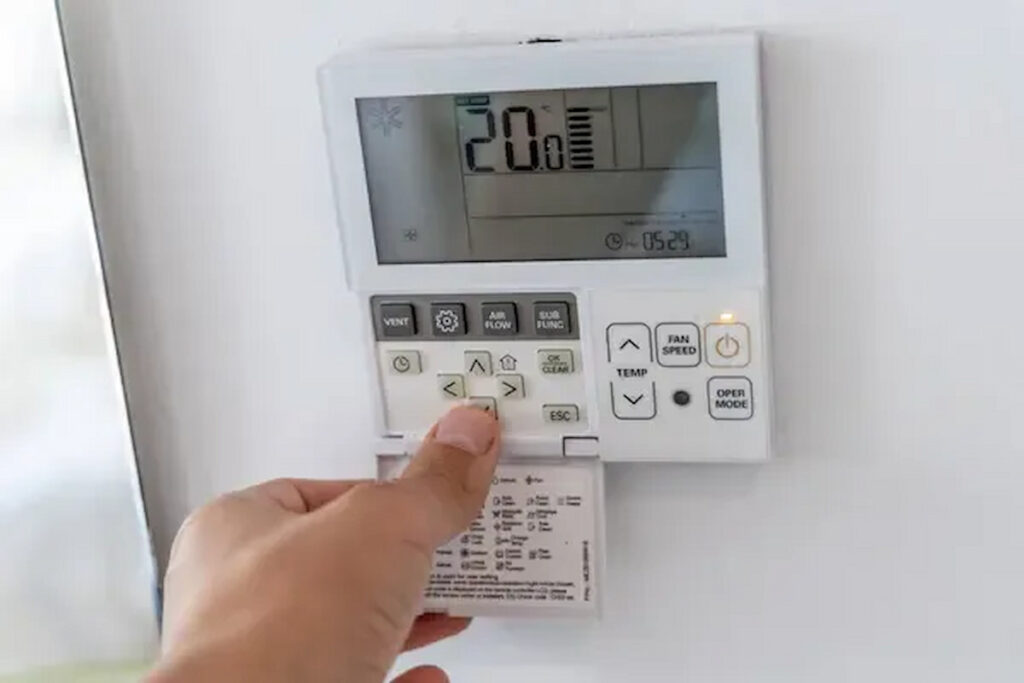
If you’ve ever cranked your thermostat down to 65°F when it’s 115°F outside in Lake Havasu City, you’ve probably noticed two things: your house never actually hits 65°, and your electric bill is terrifying
This happens because of a fundamental guideline in the industry known as the 20 degree rule for hvac.
Getting to the bottom of this rule won’t just save you from frustration; it will save your equipment from an early grave in the Arizona desert.
Understanding the Core Concept: The 20-Degree Rule Defined
What is the 20-Degree Rule for HVAC?
The 20-degree rule is a guideline stating that your air conditioner is designed to cool your home to a maximum of 20 degrees cooler than the outside air. If it’s 100°F outside, your AC can comfortably maintain 80°F indoors.
It’s important to remember that this is an efficiency guideline, not a hard physical limit. Your AC can push past it, but it does so at a massive cost to your hardware and your wallet.
Why Adhere to the 20-Degree Rule?
- Energy Conservation: Pushing for a 30-degree difference keeps your compressor running 24/7, leading to skyrocketing utility bills.
- Preventing System Strain: Constant operation in peak heat causes parts to overheat and fail.
- System Longevity: Staying near the 20-degree mark ensures your unit lasts its full 10-15 year lifespan rather than burning out in seven.
The Science Behind Your HVAC System’s Delta-T
Decoding “Delta-T”: What is it in HVAC?
In the HVAC world, we use a term called “Delta-T.” This is the temperature difference between the warm air entering your indoor return vent and the cold air blowing out of your supply vents. For a healthy system, the ideal Delta-T is typically between 16 and 22 degrees Fahrenheit.
The Relationship Between Delta-T and the 20-Degree Rule
Many homeowners think the 20-degree rule means the AC is “broken” if it can’t reach 70°F on a 110°F day. In reality, if your vents are blowing air that is 20 degrees cooler than the air going into the intake, your system is doing its job perfectly. The “rule” is simply a benchmark for what is realistic for a standard residential system to maintain.
Key Factors Influencing Cooling Capacity
- Humidity: High humidity (like during the Havasu monsoons) makes it harder for the AC to lower the temperature because it has to spend energy removing moisture first.
- System Sizing: An undersized unit will struggle to even meet the 20-degree mark.
- Refrigerant Charge: If your “freon” levels are low, your Delta-T will drop, and your cooling power vanishes.
Factors Affecting Your Home’s Ability to Meet the 20-Degree Rule
Home Insulation and Air Sealing
Your AC might be blowing cold air, but if your attic insulation is thin or your windows are drafty, that cold air is escaping. A well-sealed “envelope” is the only way to help your AC win the battle against the sun.
Window Efficiency and Shading
Direct sunlight hitting a window can raise the temperature of a room by 10 degrees in minutes. Using heavy curtains or reflective blinds during a Havasu afternoon is one of the easiest ways to support the 20-degree rule.
HVAC System Health
A dirty air filter is the #1 enemy of efficiency. If air can’t move through the filter, the coils can’t strip the heat away, and your system will run indefinitely without cooling the house.
Practical Tips to Improve Your HVAC Efficiency
Smart Thermostat Management
Avoid “thermostat chicken.” Don’t wait until the house is 90°F to turn on the AC. Set it to a reasonable temperature (like 78°F) early in the morning and let it maintain that level. Drastic 10-degree drops in the middle of the afternoon are a recipe for a system blowout.
Regular Air Filter Replacement
In the dusty Arizona desert, you should check your filters every 30 days. Clean filters mean better airflow and less stress on your blower motor.
Leveraging Professional HVAC Care
The best way to ensure your system can handle the “Delta-T” struggle is through annual HVAC maintenance. A professional tune-up catches low refrigerant or dirty coils before they leave you sweating in July.
When Your System Can’t Keep Up: Signs You Need Help
Consistent Discrepancy
If it’s only 90°F outside and your system can’t get the house below 80°F, something is wrong. You should be able to hit that 20-degree difference easily under moderate conditions.
Uneven Cooling or Hot Spots
If the master bedroom is an ice box but the living room is a sauna, your ductwork or airflow balance is likely failing.
Old or Frequently Malfunctioning System
If your unit is over 12 years old and frequently breaks down during heatwaves, it might be time for a new HVAC installation. Modern high-SEER2 units are much better at handling extreme temperature spreads than older “energy hogs.”
Achieve Peak Home Comfort and Efficiency in Lake Havasu City with The Weatherman AC
Don’t let an inefficient HVAC system compromise your comfort or your budget.
Whether you’re trying to lower your bills, need a precision tune-up, or are ready for a system that can actually handle the Arizona summer, The Weatherman AC is your local expert.Contact us today for reliable HVAC repair, maintenance, replacement or installation services and experience the difference true desert-optimized cooling can make!