Facing swamp cooler problems can turn a cool home into a hot mess. This guide dives into common issues like poor cooling, leaks, and strange noises, offering practical DIY troubleshooting tips. Learn how to fix typical evaporative cooler hiccups and when it’s smart to call a professional.
Why Is My Swamp Cooler Not Cooling Effectively?
If your evaporative cooler isn’t living up to its name, several culprits might be at play.
Dry or Clogged Cooler Pads
Mineral buildup or simple wear and tear can prevent pads from absorbing water effectively. This leads to insufficient evaporation and poor cooling.
Inspect, clean, or replace your cooler pads seasonally to maintain optimal performance.
Insufficient Water Supply
A faulty water pump, a clogged water line, or a misadjusted float valve can starve your pads of water. Low water levels also hinder efficient cooling.
Check the pump for operation, clear any clogs, and adjust the float valve for the right water height.
Restricted Airflow
Dirty air filters or blocked supply/return vents can significantly reduce your unit’s ability to circulate cool air.
Clean or replace air filters and ensure all vents are open and unobstructed throughout your home.
Fan Motor Malfunction
An overheating motor, worn bearings, or an electrical issue can stop your fan from moving air properly.
Look for obstructions around the motor, listen for unusual noises, and consider professional help for complex motor problems.
Why Is My Swamp Cooler Leaking Water?
Water leaks are messy and can indicate a bigger underlying issue.
Clogged Drain Line
Sediment, algae, or debris often accumulate in the drain line, preventing water from exiting properly and causing overflows.
Clear the drain line using a snake or by flushing it thoroughly with water.
Improper Float Valve Adjustment (Overfilling)
If the float valve is set too high or gets stuck, the unit will overfill its pan, leading to leaks.
Adjust the float valve to the correct water level. If it’s faulty, replacing it is the best solution.
Rusted or Damaged Water Pan
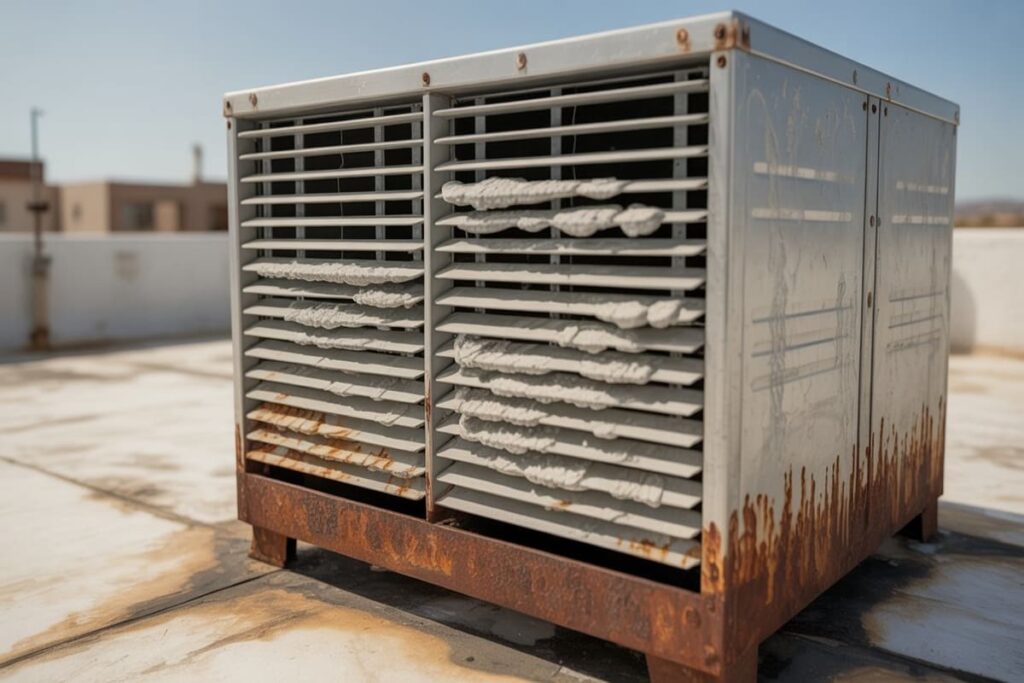
Corrosion from standing water and minerals, or physical damage, can create holes in the water pan.
Minor rust may be sealed, but severe rust or damage usually requires a full pan replacement.
Unpleasant Odors Coming from the Swamp Cooler
Foul smells mean something undesirable is growing or accumulating inside your unit.
Mold, Mildew, or Algae Growth
Stagnant water, damp pads, and organic matter create ideal conditions for these growths.
Thoroughly clean the reservoir, replace contaminated pads, and use algaecide tablets to prevent recurrence.
Stagnant or Dirty Water
Infrequent draining and cleaning allow contaminants to build up in the water basin.
Regularly drain and clean your swamp cooler’s pan and components, especially after periods of disuse.
My Swamp Cooler Won’t Turn On or Has No Power
When your unit goes silent, check its power source first.
Electrical Supply Issues
A tripped circuit breaker, blown fuse, loose wiring, or a faulty wall switch can cut power.
Check your electrical panel for tripped breakers and inspect visible wiring. Test the power switch’s function.
Faulty Motor or Pump
An internal electrical failure or complete wear and tear can render these essential components useless.
Professionals can test components with a multimeter or diagnose if parts appear dead.
Excessive Noise from Your Evaporative Cooler
Unusual noises are often a clear sign that something needs attention.
Worn Motor Bearings or Fan Belt
Lack of lubrication, age, or improper tension can cause squealing, grinding, or rattling sounds.
Lubricate motor bearings, adjust belt tension, or replace any worn fan belts.
Unbalanced or Loose Fan/Blower Wheel
Debris on fan blades, loose mounting screws, or a bent blade can lead to wobbling and loud operation.
Clean the fan blades, tighten all fasteners, and ensure the fan spins freely without any wobble.
Water Pump Noise
A clogged pump, one running dry, or general wear can create buzzing or grinding noises.
Inspect the pump for debris, ensure it’s fully submerged, and consider replacing it if the noise persists.
Proactive Steps: Maintaining Your Swamp Cooler for Optimal Performance
Regular maintenance prevents most swamp cooler problems before they start.
Regular Cleaning and Pad Replacement
Clean the entire unit seasonally. Replace cooler pads annually or every two years for best results.
Checking Water Levels and Components
Routinely inspect the float valve, pump, and water lines for proper function and mineral buildup.
Regular, thorough swamp cooler maintenance is key to preventing many common issues and extending the life of your unit, ensuring efficient and effective cooling season after season.
Winterization and Start-Up Procedures
Properly drain and cover your unit for winter. In spring, perform a thorough inspection and cleaning before startup.
When to Call a Professional for Swamp Cooler Repair
Some jobs are best left to the experts.
Complex Electrical Issues
For safety and accurate diagnosis, always call a professional when dealing with wiring, motors, or control boards.
Major Component Failures
If the motor or water pan needs replacing, or you have significant leaks requiring specialized repairs.
Persistent Problems After DIY Troubleshooting
When issues keep coming back, or you’re simply uncomfortable tackling a repair, consult an expert.
Don’t Sweat the Heat
Don’t let swamp cooler problems leave you in the heat!
If you’re experiencing persistent issues with your evaporative cooler in Lake Havasu City, AZ, or need reliable swamp cooler repair or maintenance services, contact The Weatherman AC today.
Our expert team is ready to provide top-notch heating, ventilation, and air conditioning solutions to keep your home cool and comfortable.